
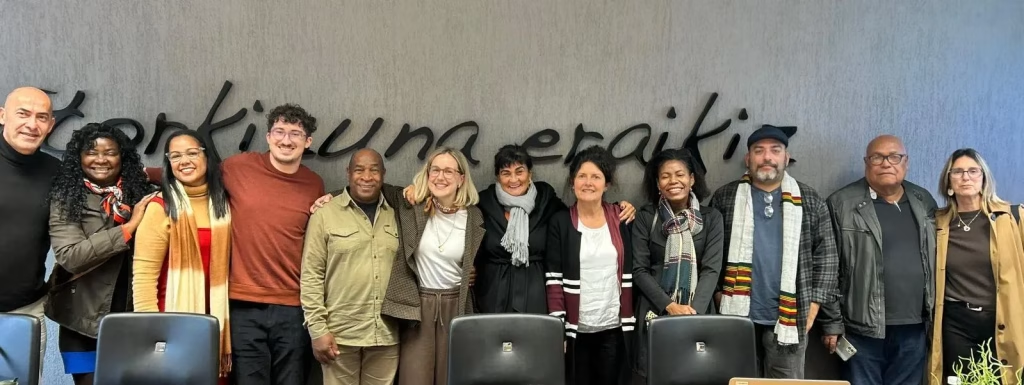
An institutional delegation linked to the cooperative movement in the Brazilian municipality of Maricá, in the state of Rio de Janeiro, recently undertook an intensive programme of meetings and visits in the Basque Country. The aim of these meetings was to gain first-hand insight into the cooperative ecosystem of the MONDRAGON Corporation and explore new opportunities for international collaboration.
The initiative, organised as part of MUNDUKIDE’s ongoing work in the region, introduced the delegation to leading examples of cooperation, innovation, education and regional development driven by the Social Economy.
Over the course of seven days, the delegation took part in institutional meetings, strategic discussions and technical visits with a range of organisations from the Basque cooperative ecosystem. The aim was to identify transferable initiatives and good practices that could help strengthen public policies and support entrepreneurship, education and local development projects in Maricá.
The programme also provided an opportunity to exchange perspectives on some of the key challenges shared across countries: how to build more inclusive models of development, strengthen local capabilities, and create new partnerships between institutions, communities and economic actors.
Among the organisations visited was KREAN, where the delegation explored cooperative business models applied to engineering, architecture, urban planning and regional development, as well as a range of initiatives showcasing advanced approaches to innovation and collaborative governance.
One of the highlights of the mission was the visit to Mondragon Unibertsitatea and its internationally recognised LEINN programme, renowned for its methodology based on experiential learning and cooperative entrepreneurship. The delegation also visited the ecosystem developed in Lea Artibai, a leading example of how education, industry and local development can be successfully integrated.
The mission also included a visit to Arizmendi Ikastola, a cooperative educational project that combines community participation, educational innovation and social commitment from the earliest stages of learning.
The visit has opened up new opportunities for collaboration between Maricá and organisations across the Basque cooperative ecosystem, particularly in the fields of cooperative education, youth training, business incubation, regional innovation and the development of collaborative ecosystems.
This growing relationship is especially significant at a time when Brazil is set to play an increasingly prominent role in ASETT’s international agenda. The country will be the guest country at the ASETT International Congress 2026, to be held in November 2026, an event designed as a global platform for exchange between institutions, regions and Social Economy initiatives.
Brazil’s participation will deepen dialogue between European and Latin American cooperative initiatives, further strengthening partnerships between regions that share a common vision: promoting economic models that are more inclusive, innovative and responsive to society’s needs.
Ultimately, meaningful transformation begins with the exchange of ideas, experiences and partnerships between regions, institutions and people committed to imagining and building a shared future.