
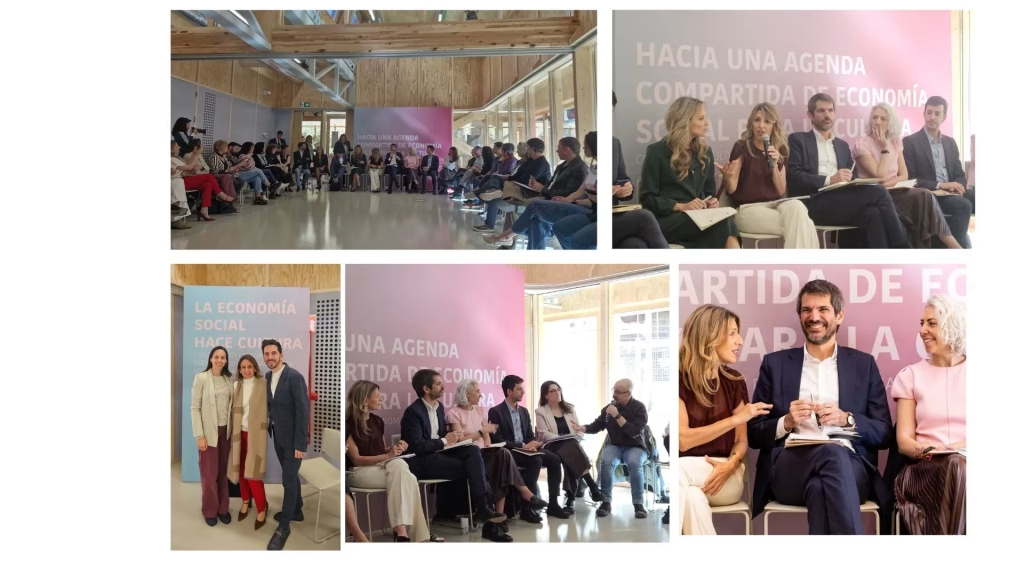
The Cultural Social Economy Moves Towards a Shared Agenda
ASETT took part in “Connecting Culture and the Social Economy: Foundations for a Shared Agenda,” a dialogue forum organised by the Ministry of Culture and the Ministry of Labour and Social Economy, bringing together representatives from cultural cooperatives and Social Economy organisations from across Spain.
The event was attended by Yolanda Díaz, Second Deputy Prime Minister and Minister of Labour and Social Economy, and Ernest Urtasun, Minister of Culture, marking an important step towards the development of a Social Economy Agenda for Culture.
More than twenty organisations from across the sector shared a common assessment: cultural cooperatives generate employment, strengthen communities and drive innovation, but require public policies that recognise both their specific characteristics and their transformative potential.
Priorities for Strengthening Cultural Cooperatives
During the event, participants identified several priority areas for reinforcing the role of the Social Economy within the cultural sector.
The main proposals put forward included:
- increasing the visibility of cultural cooperatives, recognising their contribution to quality employment, democratic governance and regional development;
- developing financing and public procurement tools tailored to the specific needs of cultural cooperatives;
- improving the availability of data through the creation of an observatory to support evidence-based public policymaking; and
- explicitly recognising cultural cooperatives within the Artist’s Statute, strengthening the legal framework for the cooperative cultural sector.
These priorities reflect the need to better connect cultural policy with economic policy, recognising culture as a strategic driver of social and regional development.
Culture and Enterprise: A Strategic Agenda for the Future
ASETT’s participation in this forum forms part of its broader mission to analyse, connect and support initiatives that strengthen the role of business in reducing inequalities, including within strategic sectors such as culture and the creative industries.
Cultural cooperatives represent an opportunity to develop business models that are sustainable, democratic and rooted in their communities, generating both economic and social value.
This dialogue marks another step towards a shared agenda capable of translating the potential of the Social Economy into public policy, financial instruments and new forms of business organisation across the cultural sector.